Will I Ever Finish This Book?
Do you know what I love? A helpful progress bar.
Whether I’m filling out a digital survey, completing an online course, or filing my taxes, I want to be able to see exactly where I am in the process. It helps me feel grounded and secure. Without it, I feel adrift, wondering what exactly I signed up for and if it’s too late to bail out.
One place I would be thrilled to have a progress bar is in my writing.
Imagine if our novels came with progress bars, showing us just how much further we need to go until the book is finished. And not just a finished first draft, but a completed manuscript, revised and polished and ready for the world. Wouldn't that make it so much easier to keep going? Sounds pretty dreamy to me.
The reality is, wherever you stand in your writing process at this moment, you really have no idea how close (or far) you are from being truly done.
Sure, you may have a guess how long it will take you to finish your first draft, or how long until your current round of revisions is complete. But you don’t know if your draft is hiding a major plot hole, or how many revision passes you’ll end up needing.
When we write a novel, we don't actually know how long it will take to finish the book. And when we don't know how far we need to go to reach our destination, it can feel unreachable.
It’s like having a map, but no legend to tell you the scale. Does one inch equal a mile or 100 miles? Three revision passes or 30? Two years of writing or 10?
When I look at my unfinished manuscript and wonder if I’ll ever finish it, this is what I tell myself:
As long as you're still working at it, you're still getting closer.
If you’re still writing, still learning, and still taking small steps toward finishing your novel, then you are moving ever closer to your destination.
If you keep working at it, you will finish your novel, it’s just a question of when. (This is when that progress bar would really come in handy.)
How do you ensure that you keep moving forward toward your goal without throwing in the towel?
Here are five things you can do.
Keep taking small steps
Writing a book is a marathon, not a sprint. It takes stamina and grit to complete a novel. To keep going you need to continually take small, steady steps toward your goal. Bonus points if you take a variety of steps to accommodate periods of high and low energy, and seasons of life that are busier than others.
For example, some days you might add to your word count, while others you might read an article about writing dialogue, or peruse your local bookstore to see what’s new in your genre.
Keeping your book in the front of your mind will prevent it from slipping to the back burner.
Reflect
Once you’ve made it a habit to take small steps, the next thing to do is stop and reflect on all that progress you’ve made. Afterall, what’s the point of making consistent progress if you never stop to appreciate it?
Reflecting might look like keeping a journal of how you’re feeling about your writing, recording your word count on a calendar, or just pausing to acknowledge, I’m doing this! Whatever method you choose, schedule time to do it regularly.
Enjoy yourself along the way
A sure fire way to guarantee you’ll give up is to make the writing process painful. If you think inflicting impossible-to-reach word count goals, and hours-long writing sessions on yourself is the way to successfully finish your novel, you’re going to be disappointed.
Instead of having high production expectations, which are guaranteed to cause burnout and avoidance, try having high fulfillment expectations. Set the expectation that writing will be fun, and then make it so.
Try connecting your writing with something you enjoy, like a special beverage, treat, or writing ritual of some kind. I know writers who track their writing sessions in fun ways and share the tally with others at the end of the month.
Whatever you can do to make yourself smile when you write is worth trying!
Remember what first sparked your interest
Since writing a novel is such a long process, it’s possible to forget why you actually fell in love with your story idea in the first place.
When that little seed of a story has grown and you find yourself juggling a cast of complex characters, multiple points of view, and a fantastical world, you may look around and wonder, how did I get here?
Occasionally reconnecting with that little story idea and remembering why it was so persistently stuck in your head can help you feel grounded and reorient your focus on your novel.
Connect with other writers
Humans are gregarious. We like to be part of a group. (Yes, even introverted writers!) And when you’re doing something as difficult as writing a novel, having one or more people to connect with is crucial.
Seeing others trying, struggling, and overcoming the same obstacles you have helps you not feel so alone.
There are many places to find fellow writers, and connecting doesn’t have to mean swapping pages or giving (or receiving) feedback.
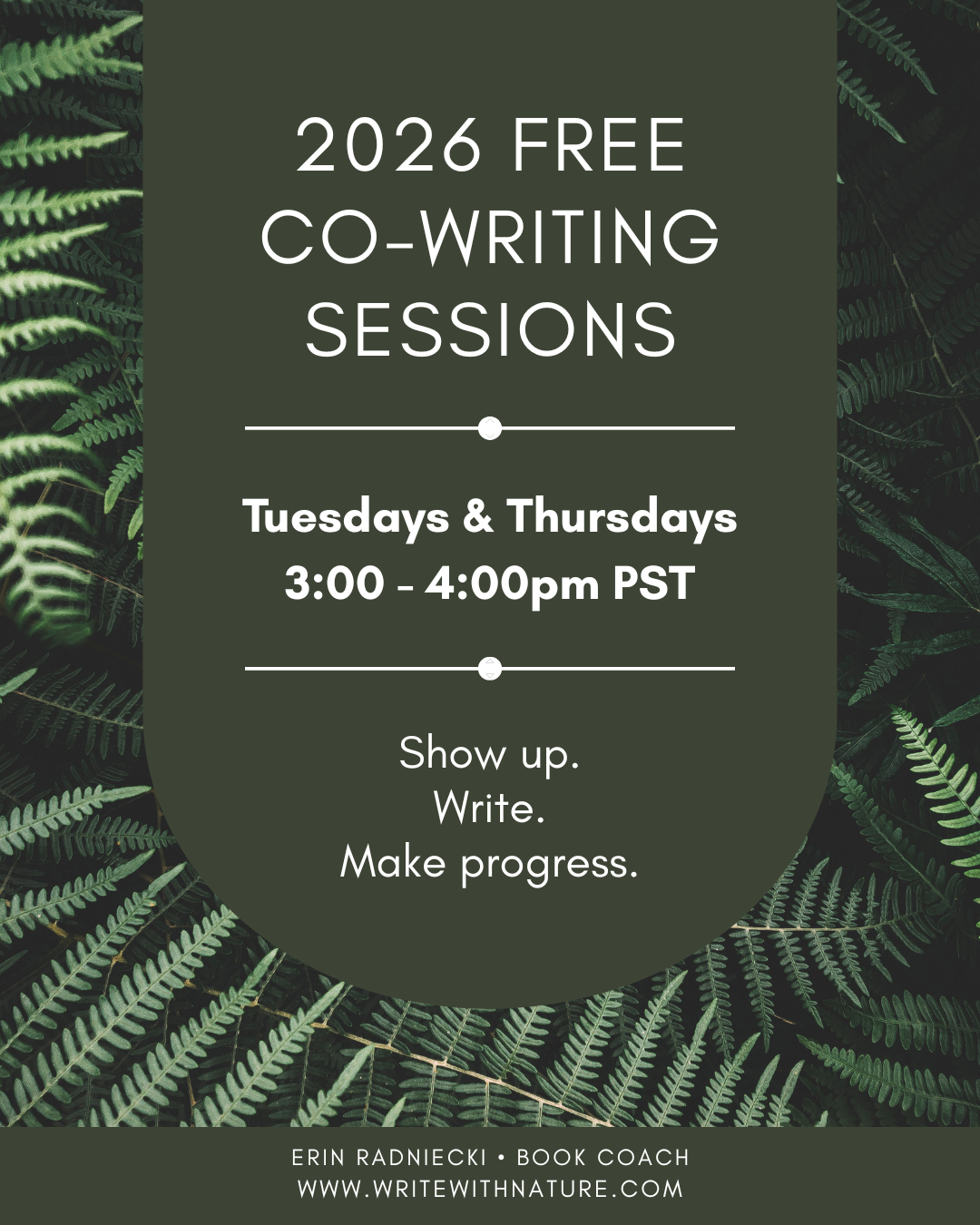
Here’s one way I’ve created this space for myself: I host two online co-writing sessions every week. There isn’t a lot of chit chat, and we don’t swap pages. We just gather, say hi, write for about an hour, and sign off. But even something as simple as that has given us the accountability needed to show up for our writing. You’re welcome to join me! You can sign up here.
If you look around I bet you’ll find a variety of opportunities to connect with other writers, either in person or online. And if you don’t, create your own!
When you’re deep in the writing trenches, wondering if you’ll ever finish your novel, just remember: As long as you keep working on it, you’re getting closer to the finish line all the time. If your novel had a progress bar, I bet you’d be surprised to see how much headway you’re making.
Completed novels don’t happen by accident.
You’ve been saying for years that you want to write a book.
But
…
Somehow you never seem to make any progress.
There’s only one way to succeed in finishing a novel:
Show up and write. Often.
Join me on Tuesdays and Thursdays at 3:00pm PST for 60 minutes of dedicated writing time.
Because 80,000 words aren’t going to write themselves.